Product overview
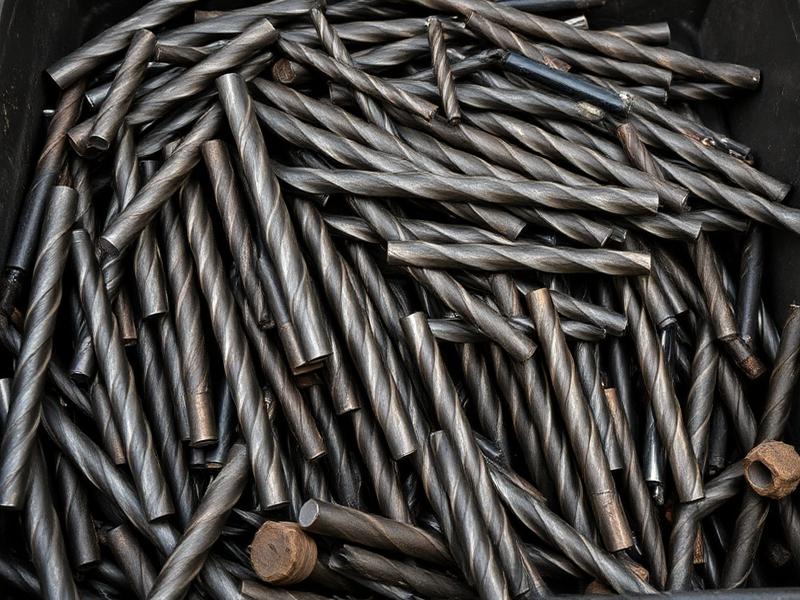
Solid carbide end mills are a high-density round tool scrap stream. Because the entire tool is manufactured from cemented carbide rather than a steel body with brazed tips, end mill scrap is generally regarded as a clean and homogeneous input for reclamation.
Material collected by Nautica Metal Scrap B.V. arrives from milling departments, tool rooms and regrinding shops. Tools may be broken, chipped, reground beyond usable length or simply obsolete. Coatings, shop oil and residual cutting fluid are typical and can be addressed during preparation.
Our carbide scrap grading guide explains how round tooling is graded, tested and valued alongside other hardmetal streams.
Technical specification
This material is covered by our solid carbide cutting and tooling scrap specification, which sets out typical forms, identification, contamination and deduction factors, sampling and packing. Typical characteristics only — contractual specifications are agreed per lot.
Material identification
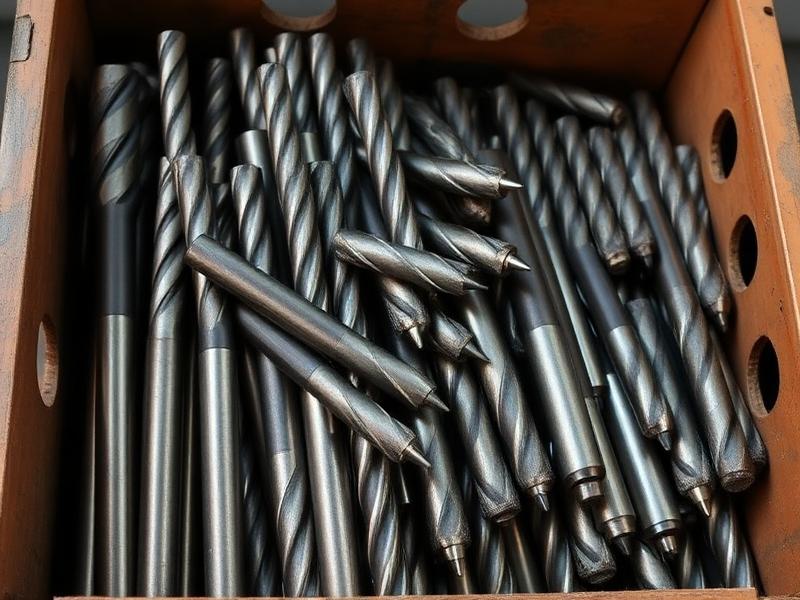
Solid carbide end mills are one-piece round tools: flutes, neck and shank are the same cemented carbide body. That makes them one of the cleaner tooling streams, because there is no braze joint and no steel body to separate. The tell-tale checks are weight for size, a shank that rings rather than dulls when tapped, and flutes that chip rather than deform when worn.
The main confusion in this stream is with HSS and cobalt HSS end mills of identical geometry. HSS tooling is visibly lighter for the same size and is often magnetic in a way solid carbide is not, but on a mixed pallet the two are easily combined by a machine shop that only sees worn tools.
- Solid carbide end mills, ball noses and chamfer tools with integral shanks
- Regrind rejects and tools worn past their last usable regrind
- Broken shanks and flute sections from tool failures
- Carbide-shank tools with replaceable tips, where the body itself is carbide
Steel-bodied and HSS tooling in the same collection
Machine shops rarely maintain separate bins for carbide and HSS round tooling. A typical collection therefore contains solid carbide tools, HSS tools, cobalt HSS, and steel-bodied tools with carbide tips. Each of these has a different recovery route and a different value, so the composition of the lot is the single most important commercial variable.
Where a generator can segregate at source — a separate bin at the tool crib rather than at the machine — the resulting lot is materially better and simpler to evaluate. Composition varies by lot, and commercial acceptance is subject to material review.
Evaluation factors specific to round tooling
- Proportion of solid carbide versus HSS and cobalt HSS tools
- Steel-shank tools with brazed or screwed carbide heads, which are a separate stream
- Coolant, cutting oil and grease retained in flutes and tool holders
- Plastic tool sleeves, caps, cases and shrink-fit adaptors packed with the tools
- Whether large-diameter tools and small drills/mills are mixed, which affects handling
Packaging and preparation
Round tooling is awkward and sharp-edged. Packing in strong drums or steel boxes prevents point loading on bag seams and keeps sharp flutes contained during handling. Because carbide is dense, containers are filled by weight rather than to the brim.
- Steel drums or reinforced boxes rather than open bags
- Plastic sleeves, cases and caps removed before packing where practical
- Long tools laid flat rather than stood upright to keep packages stable
- Palletised, strapped and labelled with lot reference and net weight
Supply and quotation basis
End mill parcels typically build up steadily rather than arriving in single large tonnages, so supply is discussed as an ongoing arrangement or as a specific lot on offer. Quantities, timing and Incoterms are confirmed for the individual lot or order; quotations can be prepared FOB Rotterdam or CIF to the destination port.
Regrind rejects, tool geometry and recoverable weight
Round tooling arrives at end of life through two different routes, and they produce different parcels. Regrind rejects come from a tool-service provider and are usually consistent in diameter range, clean and free of holders. Machine-side scrap comes from the shop floor and is more variable: broken shanks, snapped flute sections, tools still in shrink-fit adaptors and the occasional HSS cutter that nobody separated.
Geometry matters for recoverable weight in a way that is easy to overlook. Large-diameter end mills carry most of their weight in a plain shank, which is solid carbide and entirely recoverable. Small cutters carry a higher proportion of flute, and flutes lose material with every regrind, so a drum of heavily used small tooling contains less carbide per piece than its piece count suggests.
Where a shop can keep its shrink-fit and collet hardware out of the scrap bin, the parcel improves immediately: steel adaptors are dense, they inflate gross weight and they have to be removed before the carbide can be processed.
- Diameter range and rough split between large and small tooling
- Whether tools are ex-regrind service or machine-side collection
- Presence of shrink-fit adaptors, collets and tool holders in the drums
- Whether carbide-shank tools with replaceable heads are included
Round tooling is consolidated from European machine shops and tool suppliers into export-ready lots at Nautica's Netherlands base, with loading through Rotterdam. Where a buyer requires verification before shipment, an independent inspection company can be appointed under a scope agreed in the contract.
Material forms
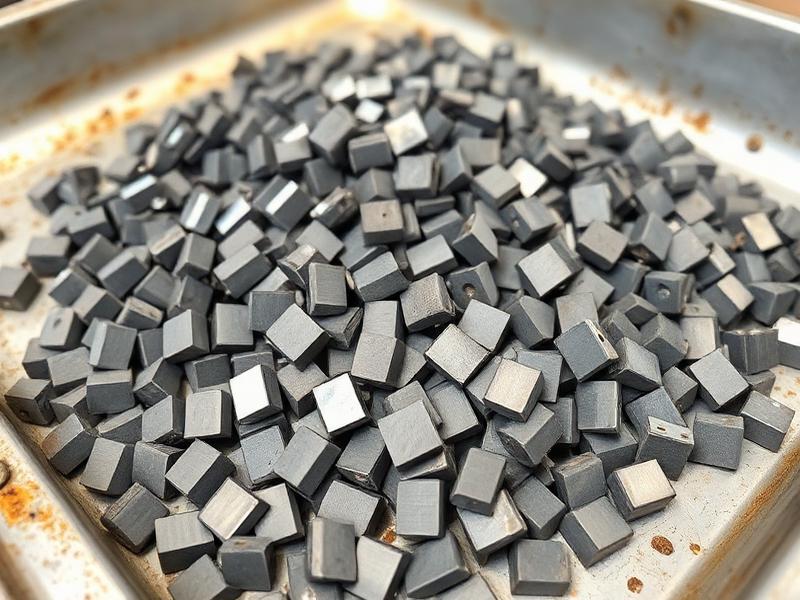
- Solid carbide end mills, square and ball nose
- Shank cutters and slot drills
- Broken shanks and reground stubs
- Coated and uncoated tools in mixed condition
Typical sources
- Precision machining and mould-making shops
- Aerospace and medical component manufacturers
- Tool regrinding and refurbishment services
- Cutting tool distributors clearing obsolete stock
Applications and recovery routes
- High-grade round tool feedstock for carbide reclaim
- Recovery of tungsten carbide and binder metal
- Raw material input for hardmetal powder production
Sorting and preparation
- Separation of solid carbide tools from HSS look-alikes
- Magnetic and density checks to detect steel-shank tooling
- Removal of collets, holders, plastic sleeves and packaging
- Draining of residual cutting fluid before packing
Inspection and verification
- Visual inspection
- Material sorting
- Magnetic separation where applicable
- XRF analysis where technically suitable
- PMI verification where applicable
- Weight verification
- Moisture inspection where applicable
- Radioactivity screening
- Packing inspection
- Loading supervision
- Third-party inspection by mutual agreement
Inspection scope, testing method, certificates, and acceptance criteria must be agreed in the sales contract before shipment.
Packaging and loading
- Steel drums or heavy-duty pails
- Layered packing to prevent puncture of the container wall
- Palletised, strapped and shrink-wrapped
- Package-level weight list prepared before loading
Export documentation
- Commercial Invoice
- Packing List
- Bill of Lading
- Certificate of Origin
- Weight Certificate
- Inspection Certificate
- Certificate of Analysis, when available
- Technical Data Sheet, when applicable
- Insurance Certificate, depending on Incoterm
- Loading photos and videos
Available documentation depends on the product, inspection arrangement, destination requirements, and agreed contractual terms.
Tungsten Carbide End Mills — frequently asked questions
Related materials