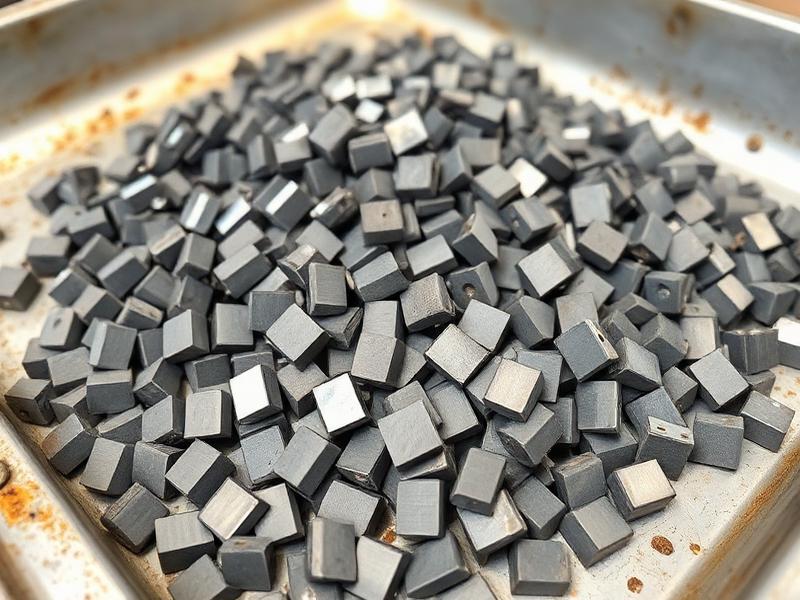
Product overview
Indexable carbide inserts are consumed in large volume by turning, milling, boring and threading operations. Once the usable cutting edges are exhausted, the insert body still consists of a cemented carbide substrate that retains significant recycling value, which is why insert scrap is one of the most consistently traded tungsten-bearing materials in the industrial recycling market.
Nautica Metal Scrap B.V. consolidates insert scrap from machine shops, contract manufacturers and tool regrinding operations. Material is received in mixed condition and can be visually checked, separated from non-carbide tooling and packed to the buyer's requirement before shipment.
Buyers new to hardmetal recycling can read our tungsten carbide scrap guide for grading, testing and valuation background before enquiring.
Technical specification
This material is covered by our solid carbide cutting and tooling scrap specification, which sets out typical forms, identification, contamination and deduction factors, sampling and packing. Typical characteristics only — contractual specifications are agreed per lot.
Material identification
Indexable inserts are recognised by their geometry: a small, dense, precisely ground body with a mounting hole or clamping seat, chip-breaker geometry pressed into the rake face, and a coating that discolours with use. Density is the first practical check on a mixed pallet — carbide is markedly heavier in the hand than any steel insert of the same size, and a hardmetal body will not be marked by a file.
Coating colour is not a reliable indicator of the substrate underneath. Gold, bronze, black and grey coatings all appear across cemented carbide, cermet and coated HSS tooling, so visual colour sorting alone does not separate the value streams. Cermet inserts in particular are commonly mixed into insert collections and are evaluated differently from tungsten-bearing carbide.
- Dense, ground insert bodies with clamping hole or seat geometry
- Coated and uncoated inserts arriving together in mixed condition
- Cermet, ceramic and coated HSS tooling routinely present in the same drums
- Broken, chipped and partially worn edges — normal and commercially acceptable
How insert lots are evaluated
Insert scrap is evaluated as a population rather than piece by piece. The commercial questions are how much of the drum weight is genuinely cemented carbide, how much is a non-carbide look-alike, and how much is cutting fluid, swarf and packing carried along with it. A lot that has been collected in a controlled bin at the machine tool behaves very differently from one swept together during a workshop clear-out.
Composition varies by grade and lot. Insert grades are formulated for specific workpiece materials, so a mixed collection contains a range of binder contents and grain sizes. Commercial acceptance is subject to material review, and where the parties require figures, analysis may be arranged and the method written into the contract.
- Share of genuine cemented carbide versus cermet, ceramic and coated HSS
- Free oil, coolant and machining swarf carried in the collection drums
- Presence of steel shims, screws, wrenches and tool holders
- Consistency between drums where the lot was accumulated over time
- Whether the generator segregated by grade family at source
Contamination and attachments
The typical deductions on insert scrap come from three sources: non-carbide tooling mixed into the same container, hardware such as clamp screws and shims that arrives with the inserts, and free liquid at the bottom of the drum. None of these prevent a lot from trading; they are simply quantified before a price is agreed.
Where a buyer needs a cleaner stream, additional hand-sorting can be arranged and the scope agreed in writing. Sorting adds handling cost, so it is worth specifying only where the recovery route genuinely requires it.
Packaging and preparation for export
- Steel drums or lidded pails filled by weight, not by volume, because the material is dense
- Palletised, strapped and shrink-wrapped for container loading
- Free liquid decanted before packing where the collection system allows
- Each package labelled with lot reference, material description and net weight
- Loading weights kept within the container's payload limit given the material density
International supply and logistics
Insert scrap is shipped in relatively small volumetric parcels with high weight per pallet, which suits part-container and consolidated shipments as well as full loads. Quotations can be prepared on FOB Rotterdam terms or CIF to the destination port; the Incoterm, packing and inspection arrangement are confirmed per order.
Documentary and customs requirements differ by destination. Classification of carbide tooling scrap depends on the actual material and the importing jurisdiction, so importers should confirm the applicable tariff code and any import formalities with their customs broker before contracting.
What to specify when enquiring for insert scrap
Insert parcels are quoted faster when the enquiry describes the population rather than the headline material. The most useful facts are where the inserts were collected (machine-side bin, tool crib, or a workshop clear-out), whether cermet and coated HSS tooling were kept out, whether clamp hardware travels with them, and whether the drums are accumulated over months or come from a single production campaign.
Recoverable value in this stream is driven by how much of the drum weight is genuinely cemented carbide. Two lots of identical gross weight can differ substantially once non-carbide tooling, steel hardware and free coolant are taken out, which is why photographs of an open drum tend to move a discussion further than a description of the tool types alone.
- Approximate net weight per drum and number of drums available
- Whether inserts are loose, still in their original plastic boxes, or mixed with holders
- Whether cermet inserts were separated at source, and on what basis
- Any XRF screening already carried out and by whom
- Loading location, available packing and the destination port for the quotation
Nautica Metal Scrap B.V. is a Netherlands-registered trading company consolidating tooling scrap from European machine shops and shipping through Rotterdam. Insert parcels are collected, checked and packed before a lot is confirmed, and third-party inspection can be appointed where a buyer requires independent verification.
Material forms
- Indexable turning inserts (square, triangular, rhombic, round)
- Milling inserts and cutter bodies with removable tips
- Threading and grooving inserts
- Coated and uncoated inserts in mixed condition
- Broken, chipped or partially used inserts
Typical sources
- CNC machine shops and contract manufacturers
- Automotive and aerospace component plants
- Tool distributors and regrinding services
- Maintenance departments of heavy industry
Applications and recovery routes
- Feedstock for cemented carbide reclamation
- Input for zinc-process and chemical reclaim routes
- Recovery of tungsten and cobalt units
- Secondary raw material for hardmetal producers
Sorting and preparation
- Separation of carbide inserts from steel tool bodies and holders
- Removal of plastic packaging, cardboard and shop debris
- Magnetic checks to identify ferrous contamination
- Optional segregation of coated and uncoated material where the buyer requires it
Inspection and verification
- Visual inspection
- Material sorting
- Magnetic separation where applicable
- XRF analysis where technically suitable
- PMI verification where applicable
- Weight verification
- Moisture inspection where applicable
- Radioactivity screening
- Packing inspection
- Loading supervision
- Third-party inspection by mutual agreement
Inspection scope, testing method, certificates, and acceptance criteria must be agreed in the sales contract before shipment.
Packaging and loading
- Steel or plastic drums with sealed lids
- Reinforced pails for smaller consolidated lots
- Palletised and strapped for container stuffing
- Net and gross weights recorded per package
Export documentation
- Commercial Invoice
- Packing List
- Bill of Lading
- Certificate of Origin
- Weight Certificate
- Inspection Certificate
- Certificate of Analysis, when available
- Technical Data Sheet, when applicable
- Insurance Certificate, depending on Incoterm
- Loading photos and videos
Available documentation depends on the product, inspection arrangement, destination requirements, and agreed contractual terms.
Tungsten Carbide Inserts — frequently asked questions
Related materials