Birch Cliff Copper Scrap Exporter — No. 2 Insulated Copper Wire from Rotterdam
Nautica Metal Scrap B.V. supplies Birch Cliff copper scrap — the ISRI combined designation for No. 2 insulated copper wire and cable with approximately 92%–94% recoverable copper — to wire choppers, refiners, and secondary smelters across China, India, Turkey, the UAE, and Southeast Asia. Every shipment is SGS inspected at the Port of Rotterdam and exported under CFR or CIF terms.
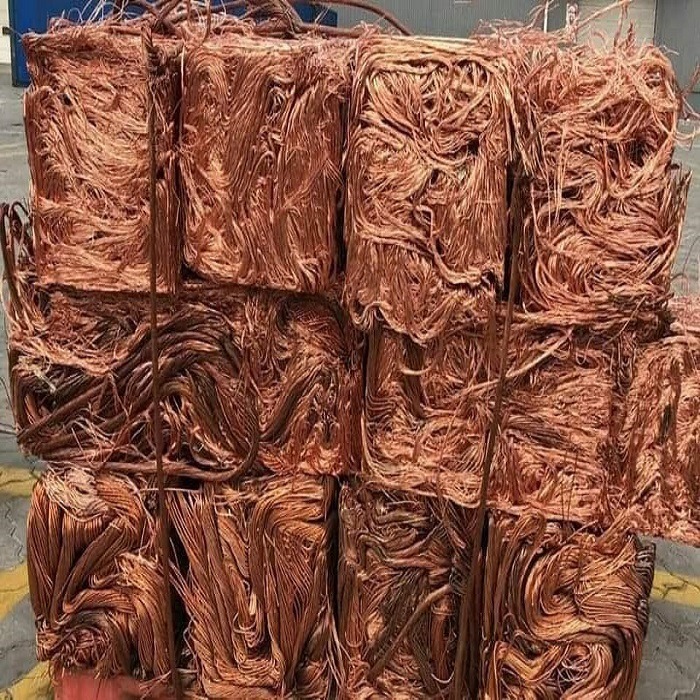
What Is Birch Cliff Copper Scrap?
In the ISRI scrap classification system, Birch designates No. 1 bare bright copper wire and Cliff designates No. 2 copper wire and cable. The term "Birch Cliff" is used in international trade to describe combined or mixed shipments of insulated copper wire and cable that fall under the No. 2 grade — typically mixed-gauge house wire, communication cable, automotive harnesses, and chopped insulated wire with PVC, rubber, or thermoplastic insulation still attached.
For copper refiners and chopping lines in Asia and the Middle East, Birch Cliff bales are a steady, high-volume feedstock. The recoverable copper content typically ranges from 92% to 94% by weight, with the remainder being insulation that is mechanically separated, granulated, and sold as PVC regrind or sent for incineration with energy recovery.
Nautica Metal Scrap B.V. aggregates Birch Cliff scrap from industrial collection points across the Netherlands, Germany, and Belgium, then consolidates and bales it at our Rotterdam-area facility for export. Monthly export capacity is 20,000 MT, with a minimum order of 25 MT per buyer.
Technical Specifications
ISRI Code
Birch / Cliff (No. 2 Copper Wire & Cable)
Recoverable Copper
92% – 94% by weight
HS Code
7404.00.99 (Copper Waste & Scrap)
Form
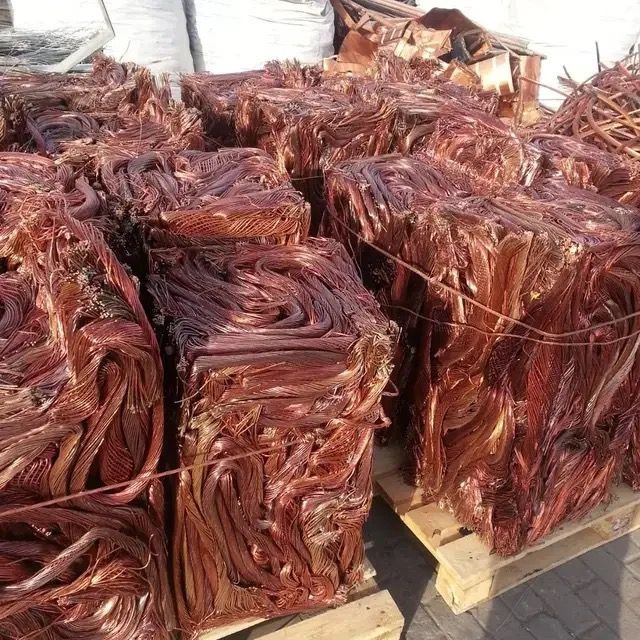
Loose or hydraulically baled insulated wire
Wire Gauge Range
Mixed: 0.5 mm – 25 mm² cross-section
Insulation Type
PVC, XLPE, rubber, thermoplastic
Free Of
Burnt wire, hair wire, excessive moisture, oily residue
Bale Density
1.2 – 1.6 t/m³
Packaging, Loading & Container Specs
- Hydraulically pressed bales (700–900 kg each) or loose-loaded for chopping lines
- 20ft container: 22–24 metric tons net (baled) / 18–20 MT (loose)
- Containers lined with woven PP fabric to prevent moisture and contamination
- Bale strapping: high-tensile steel banding, 4 straps per bale
- Loading at bonded warehouse, Port of Rotterdam — vessel sailing within 7–14 days of LC issuance
- Container sealing and weight ticket photographed and shared pre-departure
SGS Inspection & Quality Assurance
Pre-Shipment Inspection
Independent SGS, Bureau Veritas, or Cotecna inspection arranged on request. Representative sampling per ISRI guidelines for moisture, copper content, and contamination.
Recovery Testing
On-request copper recovery yield test via wire chopping sample. Results issued with Certificate of Inspection prior to vessel loading.
Documentation Pack
Bill of Lading, Commercial Invoice, Packing List, Certificate of Origin (EUR.1), SGS Inspection Report, and Annex VII waste shipment paperwork.
Worldwide Shipping from the Port of Rotterdam
As Europe's largest deep-sea port, Rotterdam offers direct weekly sailings to every major copper-processing hub. We arrange CFR and CIF deliveries to:
East Asia
Shanghai, Ningbo, Qingdao, Tianjin, Hong Kong, Busan, Kaohsiung
South & Southeast Asia
Nhava Sheva, Mundra, Chennai, Port Klang, Ho Chi Minh, Laem Chabang, Jakarta
Middle East & Africa
Jebel Ali, Dammam, Mersin, Aliaga, Alexandria, Mombasa, Durban
Frequently Asked Questions
What is Birch Cliff copper scrap?
Birch Cliff is the ISRI designation for No. 2 insulated copper wire and cable scrap with a recoverable copper content of approximately 92% to 94%. It includes mixed-gauge insulated copper wire, communication cable, and chopped wire that contains some insulation, tin, or solder. Buyers commonly process Birch Cliff through chopping lines or shredders to separate copper from PVC, rubber, and other insulation.
What is the difference between Birch Cliff and Birch?
Birch (ISRI code) refers to No. 1 bare bright copper wire — clean, uncoated, untinned, and free of insulation, with 99%+ copper purity. Birch Cliff (Birch & Cliff combined grade) includes No. 2 copper wire and insulated cable with lower recoverable copper. Birch trades at a premium close to LME copper; Birch Cliff trades at a discount based on recoverable yield.
What is the recovery yield from Birch Cliff scrap?
Typical chopping-line recovery from Birch Cliff bales is 55% to 75% copper by weight, depending on the wire gauge mix, insulation type, and the efficiency of the granulator. Our SGS pre-shipment inspection includes representative sampling and recovery testing on request.
What are the export terms for Birch Cliff copper from Rotterdam?
We export Birch Cliff copper scrap under CFR or CIF Incoterms from the Port of Rotterdam to all major Asian, Middle Eastern, and European ports. Minimum order quantity is 25 tons (1 x 20ft container). Payment is 30% TT advance and 70% LC at sight against shipping documents.
Is Birch Cliff scrap suitable for direct smelting?
Birch Cliff is not typically charged directly into a smelter — it is first processed through a wire chopping line to separate copper granules from insulation. Refined chopped copper from Birch Cliff can then be sold as Berry/Candy or sent to a secondary smelter for refining into copper cathode or rod.
Container Loading Capacity
Loaded weight per container is calculated on a calibrated 60-tonne weighbridge at our Rotterdam yard. Photographs and bridge tickets accompany every shipment for birch / cliff copper scrap.
| Container | Net Loaded Weight | Form |
|---|---|---|
| 20'GP | 23–25 MT | Loose heavy copper |
| 40'HC | 25–27 MT | Mixed forms |
ISRI Grade
Birch / Cliff
HS Code
7404.00
Typical Purity
94–96% Cu
Quality Assurance Process
- 1
Gate inspection
Inbound trucks weighed and visually graded against ISRI master samples before unloading.
- 2
Yard re-sort
Material re-sorted by alloy family, photographed lot-by-lot, and segregated to grade-specific bays.
- 3
Magnet & XRF check
Magnetic separation removes ferrous contamination; XRF spot-checks confirm alloy chemistry.
- 4
Pre-load audit
Container floor lined, weight target confirmed, stuffing sequence photographed with timestamps.
- 5
Third-party inspection
SGS, Bureau Veritas, Intertek, CCIC or TÜV inspect on buyer request before bill-of-lading release.
- 6
Seal & document
High-security bolt seal applied; seal number printed on packing list, B/L and inspection certificate.
SGS & Intertek Inspection
Pre-shipment inspection is arranged at the loading point on the buyer's request. SGS, Bureau Veritas, Intertek, CCIC and TÜV are all welcome at our Rotterdam yard — the buyer instructs the inspector directly and we invoice the cost at actual.
The inspector observes stuffing, draws representative samples for XRF or wet-lab analysis, photographs the loaded container, witnesses the seal application and issues the inspection certificate prior to bill-of-lading release. Destination-mandated certificates (BIS for India, CCIC for China, TSE for Turkey) are arranged where required.
Shipping & Logistics
Loading takes place at our Rotterdam yard with direct gate access to ECT, APMT and RWG terminals. Weekly direct sailings cover Asia, the Middle East, Africa and the Americas. Typical transit times below are indicative — exact ETAs are confirmed on each booking.
Rotterdam → Nhava Sheva
18–22 days
Rotterdam → Shanghai
28–32 days
Rotterdam → Ho Chi Minh
28–32 days
Rotterdam → Mersin
14–18 days
Rotterdam → Jebel Ali
18–22 days
Rotterdam → Houston
18–22 days
Export Documentation
- Commercial invoice & packing list
- Weighbridge tickets per container
- Bill of lading (telex-release on request)
- Container loading photographs
- EUR.1 movement certificate (where applicable)
- EU Annex VII waste-shipment document (non-OECD)
- Third-party inspection certificate (SGS/BV/Intertek/CCIC)
- Certificate of origin (Chamber of Commerce)
Countries We Supply
We ship birch / cliff copper scrap on CIF and FOB terms to industrial buyers in over fifty countries. Active monthly contracts include:
Buyer FAQ
What is the difference between Birch and Cliff?
ISRI Birch is No.1 copper wire of any size that may have a slight green or brown oxidation; Cliff is No.2 copper wire and miscellaneous, with up to 6% impurities including light coatings. Both honour ISRI Circular specifications.
Do you accept smelter chemical analysis?
Yes. The buyer or buyer's smelter can perform XRF analysis on samples drawn at the loading port. Final invoicing can be re-conciled against the inspection certificate.
Can Birch/Cliff be co-loaded with Millberry?
We strongly recommend separate containers to preserve grade integrity and meet destination customs declarations. Co-loading is possible on request but discounts the entire cargo to the lowest grade.
Which ports do you load from?
Primary loading from Rotterdam, with Antwerp and Hamburg available for specific routings.
What is the typical copper recovery from Birch after refining?
Buyers report 95.5–96.5% net metallic recovery from Birch through anode furnace + electrolytic refining, versus 93–94% for Cliff. Recovery figures drive the discount from LME.
Are radiator ends and connectors accepted?
Radiator ends with mixed copper/brass are downgraded to a separate 'Dream/Drove' cargo — they are not accepted inside a Birch or Cliff container to protect chemistry.
How is Cliff separated from insulated wire?
Cliff is uninsulated copper by definition. Any insulated fraction is either stripped and re-graded as Berry, or moved to the ICW stream. Segregation is done manually plus eddy-current at the yard.
What discount to LME applies to Birch and Cliff?
Indicative CIF-Asia discounts are LME minus 5–7% for Birch and LME minus 10–14% for Cliff, depending on freight and destination duty. Firm pricing is quoted per booking.
Do you offer sample containers of Birch or Cliff?
Yes, one full 20'GP trial container is available against 100% LC at sight so new buyers can benchmark yields before committing to monthly contracts.
Is Birch subject to EU Annex VII documentation?
Yes. Any copper scrap export to a non-OECD destination requires the EU Waste Shipment Regulation Annex VII form, which we prepare and lodge for the buyer at no additional cost.
What is the maximum lot size you can hold in stock?
Rolling stock is 200–300 MT of Birch and 150–250 MT of Cliff at the Rotterdam yard, refreshed weekly from the industrial collection network.
Which countries prefer Cliff over Birch?
Chinese secondary refiners in Anhui and Jiangxi actively bid for Cliff for its cost-per-tonne of contained copper, while Indian and Turkish anode makers usually prefer Birch for the higher yield.
Request a Birch/Cliff Copper Scrap Quotation
Send your quantity, destination port and Incoterm. We reply with a CIF/FOB offer, full specification sheet and export documentation list.
Ready to Discuss Your Metal Scrap Requirements?
Contact our sales team for competitive pricing, bulk orders, and customized solutions.MOQ: 25 MT | Monthly Capacity: 20,000 MT