Product overview
High-speed steel contains significant alloying additions, commonly including tungsten, molybdenum, chromium, vanadium and sometimes cobalt. That alloy content is what makes HSS scrap a distinct and traded stream rather than ordinary steel scrap.
HSS is often collected alongside solid carbide tooling and the two must be separated, since they follow entirely different reclamation routes and command different commercial terms.
HSS is the material most often confused with carbide in workshop collections, as our tooling scrap grading guide explains.
Technical specification
This material is covered by our high speed steel (hss) scrap specification, which sets out typical forms, identification, contamination and deduction factors, sampling and packing. Typical characteristics only — contractual specifications are agreed per lot.
Material overview
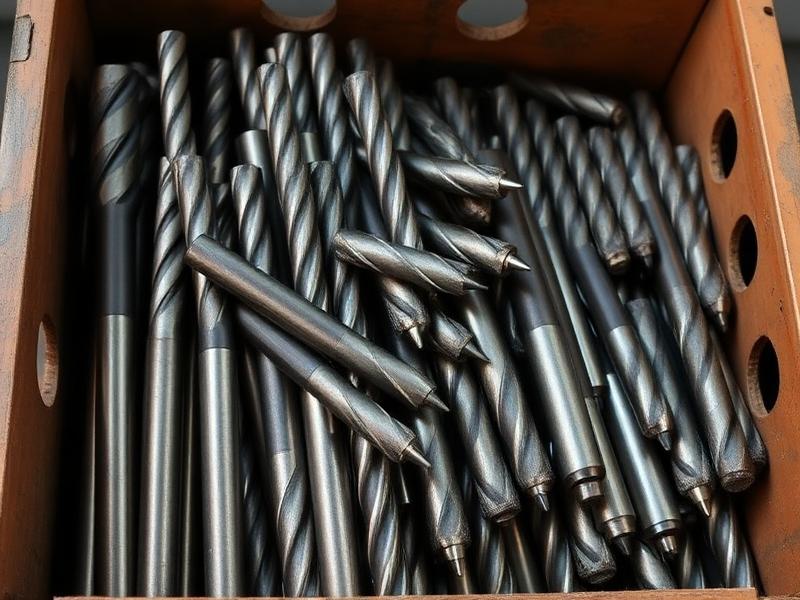
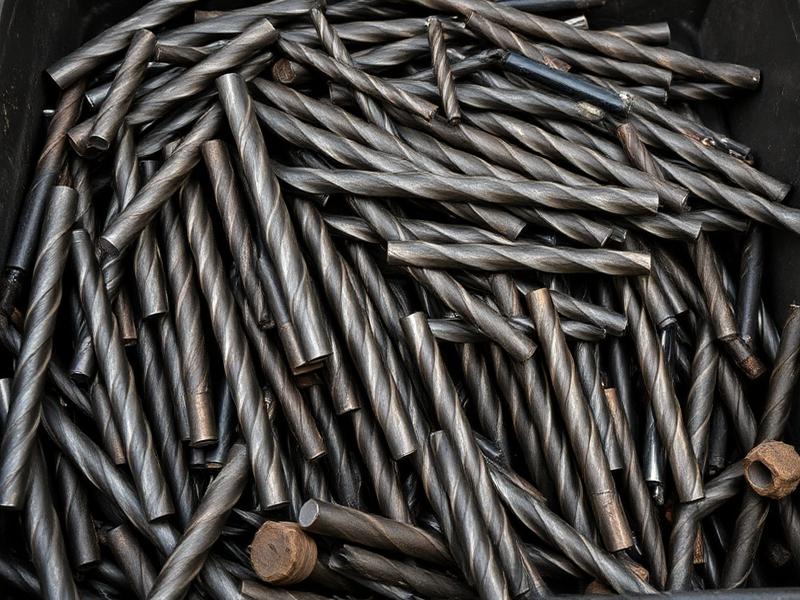
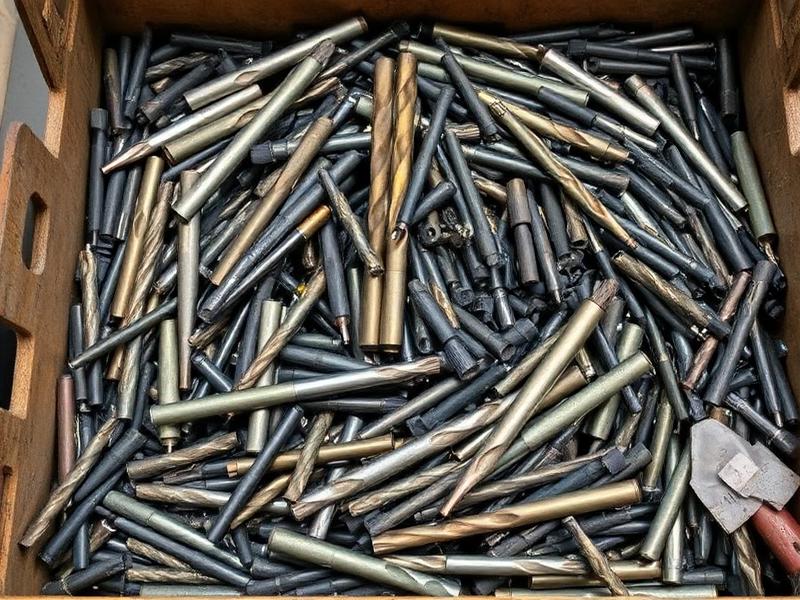
High-speed steel scrap comes from the same places as carbide tooling: machine shops, tool rooms, regrinding services and tool manufacturers. The articles are similar in shape — drills, taps, reamers, broaches, saw blades, hobs and form tools — which is precisely why the two streams end up in the same bin.
HSS is an alloy steel, not a hardmetal. It is tungsten- and molybdenum-alloyed in many grades, which gives it value, but it is recovered through steel and ferroalloy routes rather than through hardmetal processing.
- Twist drills, taps, reamers and countersinks
- Broaches, hobs, gear cutters and form tools
- Power hacksaw and bandsaw blades
- Tool bits, blanks and regrind rejects
- HSS turnings and grinding swarf from tool production
Separating HSS from carbide
The commercial value of an HSS parcel depends heavily on how cleanly it has been separated from carbide, and vice versa. Weight for size is the practical field test: a carbide drill is dramatically heavier than an HSS drill of the same dimensions. Magnetic behaviour and the way the tool responds to a file give further confirmation.
Mixing is not fatal to either stream, but it costs both. A tool crib bin dedicated to HSS and a separate one for carbide is the single most effective thing a generator can do for the value of both parcels.
- Share of carbide tooling accidentally included in the HSS collection
- Cobalt HSS grades where the generator can identify them
- Coatings on tooling, which are surface layers and do not change the substrate
- Cutting oil, coolant and grease on the tools
- Plastic cases, sleeves and packaging shipped with the tools
Turnings and grinding swarf
HSS turnings and grinding residue behave like the soft streams rather than like solid tooling: high surface area, retained fluid, and vulnerability to contamination from mixed machining. They are packed in sealed drums and described separately from solid tooling.
Packaging and preparation
- Steel drums or reinforced boxes; sharp tooling contained
- Carbide removed from the HSS parcel at source where practical
- Turnings and swarf in sealed drums, drained, packed as a separate fraction
- Plastic cases and sleeves removed before packing
- Palletised, strapped and labelled with fraction, lot reference and net weight
Commercial terms
HSS accumulates steadily wherever tools are consumed, so supply is often discussed as an ongoing arrangement. Availability and terms are confirmed per lot; quotations are prepared FOB Rotterdam or CIF to the destination port.
Collection practice, bin discipline and what makes an HSS parcel clean
The quality of an HSS parcel is decided at the tool crib, not at the loading bay. Where a shop keeps a dedicated bin for high speed steel tooling and a separate one for carbide, the resulting lots are clean on both sides and both are worth more. Where everything goes into one drum, the carbide is sold at HSS value and the HSS attracts a deduction in a carbide lot — a loss on both counts.
Beyond that separation, the recurring dilutants are predictable: steel tool holders and collets that arrive with the tools, plastic tool cases and sleeves that inflate volume without adding weight, bi-metal saw blades that are mostly backing steel, and free cutting oil pooled at the bottom of drums.
Tool mix is worth describing because it correlates with alloy content. A parcel dominated by taps, drills and reamers from general engineering sits in a different part of the family range than one made up of hobs, broaches and form tools from a gear shop. Neither is presented as a grade claim, but both help place the material accurately at enquiry stage.
Where a shop holds a large quantity of unused or obsolete blanks and unground tool stock, that is a distinct and more uniform parcel and is quoted separately from used tooling.
- Whether the facility also handles carbide, and how the two are separated
- Tool mix present — drills, taps, reamers, cutters, hobs, broaches, blades
- Whether bi-metal blades, tipped tooling or holders are in the same drums
- Split between used tooling, unused blanks and turnings or grinding solids
HSS parcels are consolidated from the same European tool rooms and regrinding businesses that supply Nautica's carbide streams, which is why separation discipline is built into how the material is collected and described. Loading is handled through Rotterdam.
Material forms
- Twist drills, taps and reamers
- Broaches, hobs and gear cutters
- HSS saw blades and segments
- Planer and lathe tool bits
- Grinding swarf from HSS tool production
Typical sources
- Machine shops and production engineering
- Tool rooms and maintenance departments
- Sawmills and cutting operations
- Tool manufacturers and regrinding services
Applications and recovery routes
- Remelt feedstock for tool steel production
- Alloy recovery in specialty steelmaking
- Secondary source of tungsten and molybdenum units
Sorting and preparation
- Separation of HSS from solid carbide tooling
- Magnetic checks, since HSS is magnetic and carbide typically is not
- Removal of plastic handles, sleeves and packaging
- Segregation of cobalt-bearing grades where declared
Inspection and verification
- Visual inspection
- Material sorting
- Magnetic separation where applicable
- XRF analysis where technically suitable
- PMI verification where applicable
- Weight verification
- Moisture inspection where applicable
- Radioactivity screening
- Packing inspection
- Loading supervision
- Third-party inspection by mutual agreement
Inspection scope, testing method, certificates, and acceptance criteria must be agreed in the sales contract before shipment.
Packaging and loading
- Steel drums or reinforced boxes
- Crated long tooling such as broaches
- Palletised, strapped and weight-listed
- Loading photographs available on request
Export documentation
- Commercial Invoice
- Packing List
- Bill of Lading
- Certificate of Origin
- Weight Certificate
- Inspection Certificate
- Certificate of Analysis, when available
- Technical Data Sheet, when applicable
- Insurance Certificate, depending on Incoterm
- Loading photos and videos
Available documentation depends on the product, inspection arrangement, destination requirements, and agreed contractual terms.
High-Speed Steel Scrap — frequently asked questions
Related materials