Product overview
Mining and construction tooling consumes large volumes of carbide in the form of buttons, inserts and tips brazed or pressed into steel bodies. The steel-to-carbide ratio in this stream is high, which makes accurate assessment of recoverable content particularly important.
Material is usually received heavily soiled with rock dust, clay and bitumen. Preparation concentrates on removing loose contamination and, where commercially agreed, separating carbide tips from the steel bodies.
Mining carbide is graded on different criteria from tooling scrap; the comparison is set out in our carbide scrap grading and valuation guide.
Technical specification
This material is covered by our mining, construction and industrial wear carbide specification, which sets out typical forms, identification, contamination and deduction factors, sampling and packing. Typical characteristics only — contractual specifications are agreed per lot.
What mining and construction carbide is
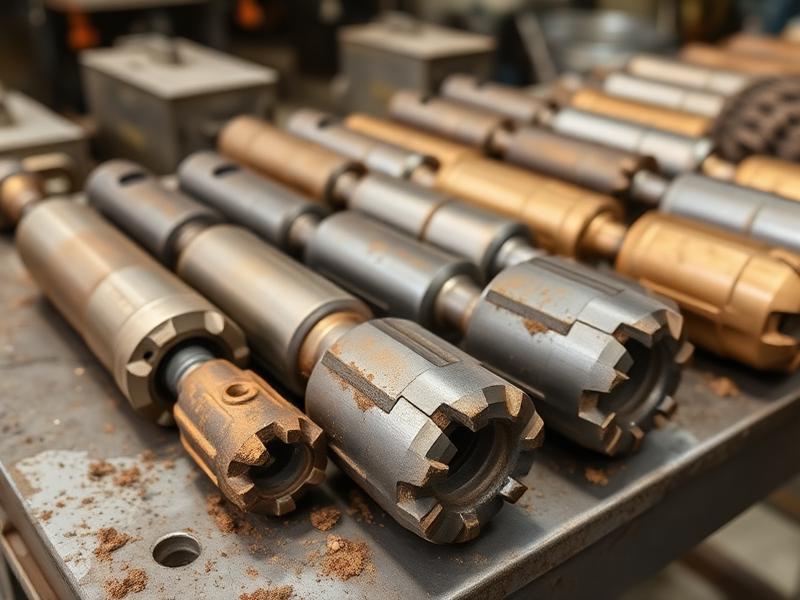
This stream comes from rock drilling, tunnelling, road milling, trenching and quarrying. The characteristic articles are drill buttons pressed into steel bit bodies, conical road-milling and trenching picks with a carbide tip brazed to a steel shank, and assorted button bits and reamers.
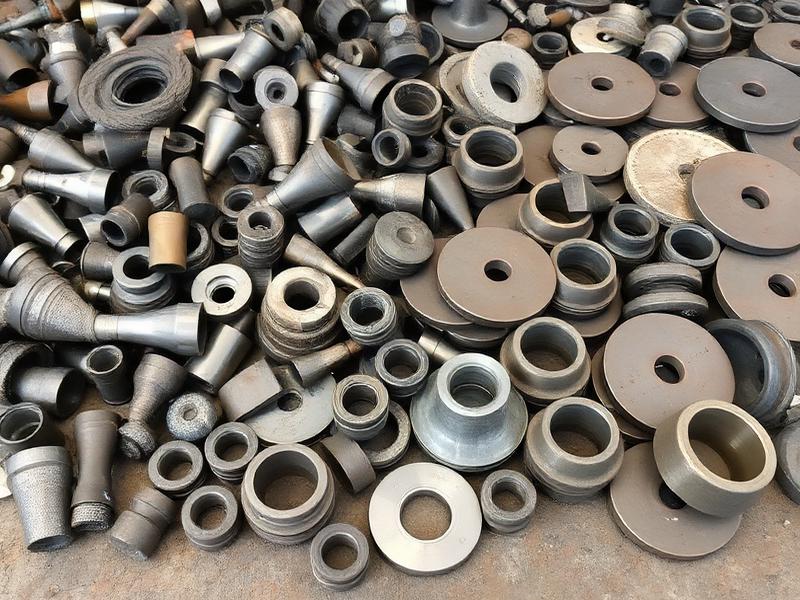
Two features distinguish it from tooling scrap. First, the carbide grades used are generally coarser and tougher, formulated for impact rather than for edge retention. Second, the material almost always arrives attached to, or embedded in, a substantial steel body.
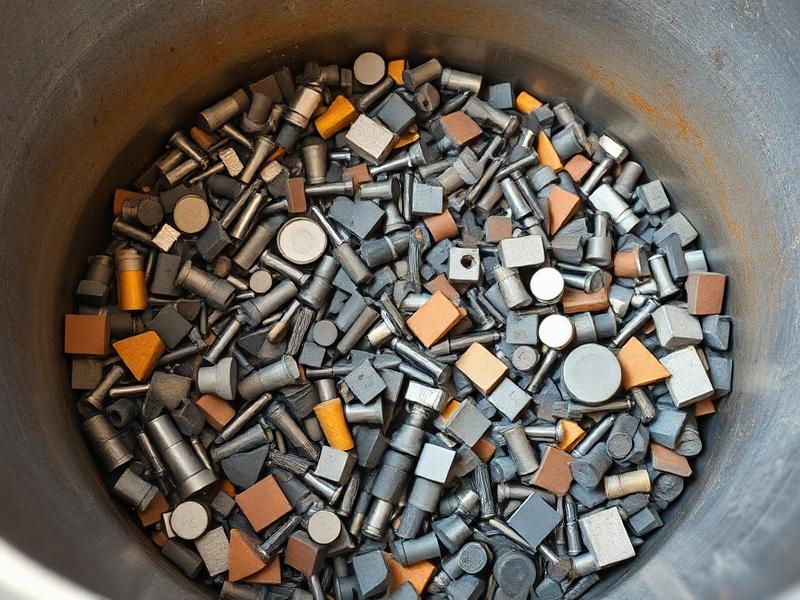
- Loose drill buttons recovered from worn bit bodies
- Complete button bits with carbide still pressed into the steel head
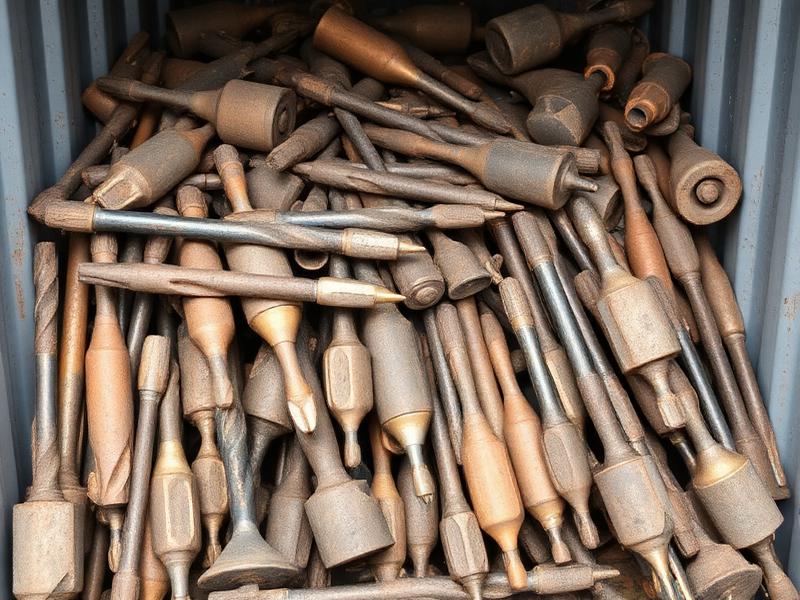
- Road-milling and trenching picks with brazed carbide tips
- Coal and mineral cutting picks and holders
- Reamers, gauge inserts and drilling accessories with carbide elements
Loose buttons versus complete bits
The ratio between loose buttons and complete steel-bodied bits determines almost everything about the offer. A drum of buttons already pressed out is a concentrated tungsten-bearing parcel; a pallet of complete bits is mostly steel with carbide distributed through it, and it requires mechanical recovery before any tungsten is available.
Both trade. They are simply described, packed and evaluated separately, and never blended into a single undifferentiated figure. Composition varies by grade and lot, and commercial acceptance is subject to material review.
- Proportion of loose buttons to complete steel-bodied bits and picks
- Typical tip size on picks relative to the steel shank
- Rock dust, grit, clay and drilling mud carried with field-collected material
- Corrosion and moisture on material stored outdoors at a mine site
- Tips broken out during service, leaving steel bodies with empty seats
Field collection realities
Mining scrap is collected in harsh conditions, often outdoors, and it reflects that. Rock dust and mud are routine, and material stored in an open yard for a season carries moisture and surface rust on the steel. Neither prevents trading, but both add weight that is not recoverable material, so covered storage and rough screening at the collection point are worth the effort.
Packaging and loading
- Loose buttons in sealed steel drums, filled by weight because of their density
- Complete bits and picks in reinforced boxes or on secured pallets
- Loose dirt and grit screened off before packing where practicable
- Material kept under cover before loading to limit added moisture
- Each package labelled with fraction, lot reference and net weight
International supply
Mining carbide parcels can be substantial in weight, and loading is planned around container payload rather than volume. Quotations are prepared on FOB Rotterdam or CIF terms once the button and complete-bit fractions, packing and any inspection scope are agreed for the specific lot.
Button recovery, steel bodies and how mining parcels are presented
Mining and construction carbide reaches the market in two presentations that trade quite differently. Pressed-out buttons and inserts are clean carbide and directly assessable. Complete bits, picks and drill heads with the carbide still set into a steel body are mostly steel by weight, and the carbide share has to be estimated from button count and size rather than from the weight of the parcel.
Both are supplied. What matters is that the parcel is described for what it is, packed as separate fractions where both are present, and photographed clearly enough that button count and size can be judged. A drum of complete rotary bits and a drum of pressed-out buttons are not comparable offers even at identical net weight.
Field condition is part of the description. This material comes out of drilling and cutting operations, so rock dust, dried mud, surface rust on the steel bodies and the occasional broken shank are normal. Rust on steel does not affect the carbide, but heavy adhering rock and cement do add weight that carries no recoverable content.
- Split between complete bits and pressed-out buttons or inserts
- Typical button diameter and approximate count per bit where known
- Bit types present — rotary, DTH hammer bits, road-milling picks, cutting tools
- Degree of adhering rock, mud or cement on the parcel
Nautica Metal Scrap B.V. works with quarrying, tunnelling and civil contractors whose worn bits and picks accumulate faster than they can be handled on site. Parcels are consolidated, described by fraction and shipped through Rotterdam under documentation issued for each shipment.
Material forms
- Button bits and rock drill bits
- Road milling picks and asphalt cutting tools
- Trenching and foundation drilling teeth
- Loose carbide buttons recovered from bit bodies
Typical sources
- Underground and open-pit mining contractors
- Tunnelling and civil engineering projects
- Road milling and highway maintenance fleets
- Drilling equipment service workshops
Applications and recovery routes
- Carbide recovery after separation from steel bodies
- Steel body recycling as a secondary stream
- Feedstock for hardmetal reclamation once liberated
Sorting and preparation
- Assessment of carbide-to-steel ratio
- Removal of rock, clay, bitumen and loose debris
- Magnetic handling of steel bodies
- Separation of loose buttons where already liberated
Inspection and verification
- Visual inspection
- Material sorting
- Magnetic separation where applicable
- XRF analysis where technically suitable
- PMI verification where applicable
- Weight verification
- Moisture inspection where applicable
- Radioactivity screening
- Packing inspection
- Loading supervision
- Third-party inspection by mutual agreement
Inspection scope, testing method, certificates, and acceptance criteria must be agreed in the sales contract before shipment.
Packaging and loading
- Steel drums or heavy-duty boxes
- Bulk crates for complete bit bodies
- Palletised with weight limits observed per package
- Loading photographs recorded on request
Export documentation
- Commercial Invoice
- Packing List
- Bill of Lading
- Certificate of Origin
- Weight Certificate
- Inspection Certificate
- Certificate of Analysis, when available
- Technical Data Sheet, when applicable
- Insurance Certificate, depending on Incoterm
- Loading photos and videos
Available documentation depends on the product, inspection arrangement, destination requirements, and agreed contractual terms.
Mining and Construction Carbide — frequently asked questions
Related materials