Product overview
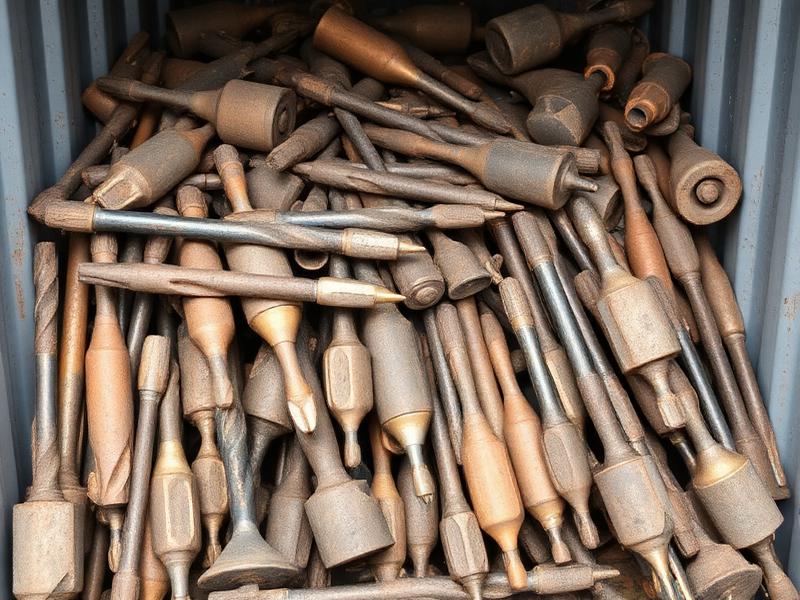
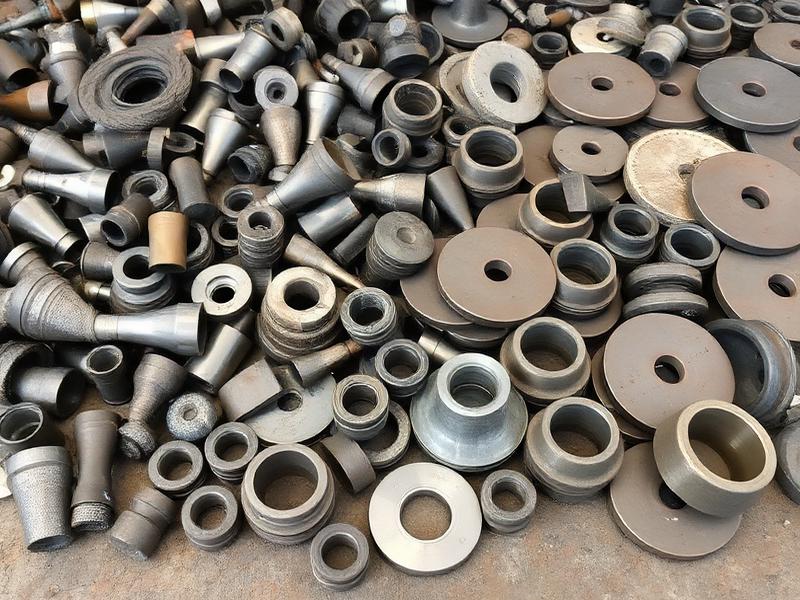
Oil and gas operations use cemented carbide in nozzles, bit inserts, hardfacing components, valve trim and flow control parts. Retired equipment therefore represents a concentrated but geometrically varied source of tungsten-bearing scrap.
This stream requires careful handling because components may have been in contact with hydrocarbons, drilling fluids or scale. Declaration of prior service conditions is a prerequisite before any material is accepted or offered.
For the wider recycling context around drilling-sector hardmetal, see our tungsten carbide recycling guide.
Technical specification
This material is covered by our mining, construction and industrial wear carbide specification, which sets out typical forms, identification, contamination and deduction factors, sampling and packing. Typical characteristics only — contractual specifications are agreed per lot.
Where this material comes from
Oilfield and gas-sector carbide arises from drilling, completion and workover equipment: tricone bit inserts, nozzles, stabiliser and reamer hardfacing elements, valve and choke components, and matrix-body drill bit material. It is generated at rig sites, service company workshops and bit repair facilities.
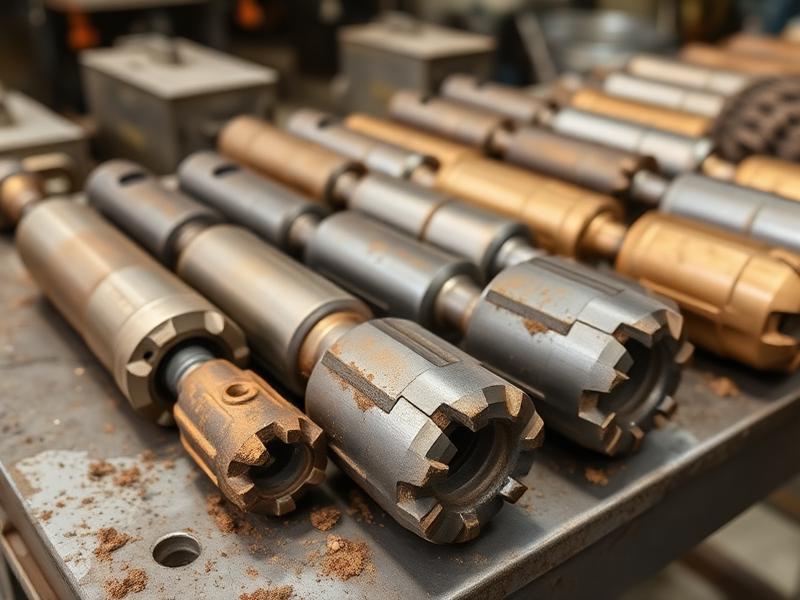
The stream is heterogeneous by nature. Matrix bit bodies in particular are a composite of tungsten-bearing material in a metallic binder, which behaves quite differently from a pressed and sintered insert, and they are described separately for that reason.
- Tricone and roller cone bit inserts, loose or still in the cone
- Drill bit nozzles and flow components
- Matrix-body bit material and matrix fragments
- Hardfacing elements from stabilisers, reamers and drill collars
- Carbide components from valves, chokes and completion equipment
Matrix material versus discrete inserts
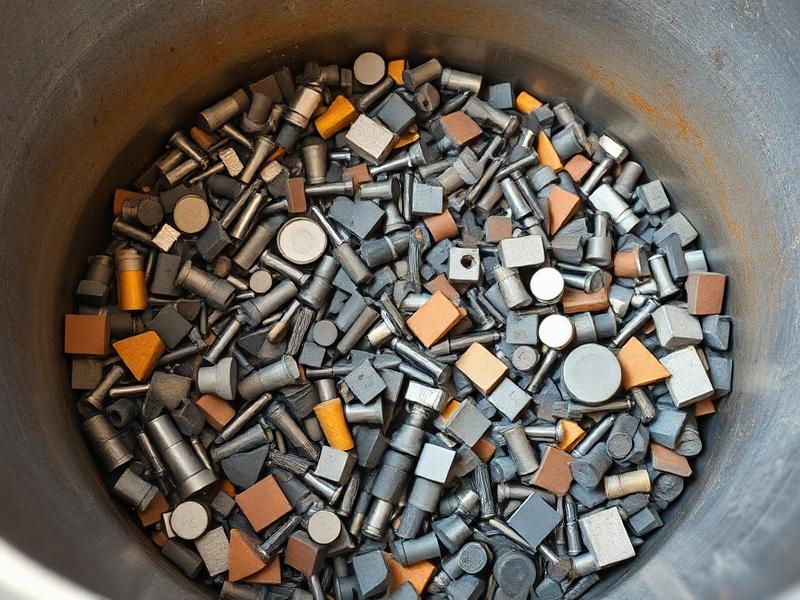
A discrete insert is a defined, dense article. Matrix material is not: it is tungsten-bearing powder infiltrated with a binder into a bit body, and it is inseparable from the structure around it. Recovery routes and evaluation for the two are different, and combining them in a single description would be misleading.
Where a parcel contains both, the fractions are listed separately. Analysis may be arranged where applicable, and final specifications are agreed for the individual lot or order.
- Proportion of loose inserts, cones with inserts still fitted, and matrix material
- Steel bit bodies, bearings and journal material accompanying the carbide
- Drilling fluid, oil-based mud residue and grease on field-returned parts
- Hardfacing overlays fused to steel, which cannot be separated by hand
- Any items subject to a customer return or repair obligation
Cleanliness and residue
Equipment returned from a well carries drilling fluid, grease and formation debris. Oil-based mud residue in particular is worth removing at source: it adds weight, complicates handling and can affect how the parcel is treated in transport. Parts should be drained and wiped down before packing, and free liquid must not be shipped.
Packaging and preparation
- Sealed steel drums for loose inserts and nozzles
- Heavy boxes or secured pallets for cones, matrix pieces and bit sections
- Insert, matrix and steel-attached fractions packed and labelled separately
- Parts drained and wiped down; no free liquid in packages
- Palletised, strapped and labelled with fraction, lot reference and net weight
Export handling
Oilfield parcels are usually dense and moderate in volume, and consolidate well with other hardmetal streams. Documentation is prepared per shipment, and importers should confirm classification and any import requirements for their destination with their customs broker before contracting.
Field returns, screening obligations and documentation for oilfield arisings
Oilfield carbide arrives from a service environment with its own compliance expectations, and those expectations shape what can be shipped. Components returned from downhole service can carry hydrocarbon residue, drilling mud, brine and — depending on the field and formation — naturally occurring radioactive material accumulated as scale. Screening for that is a standard precaution for this stream rather than an unusual request.
Because of that history, oilfield parcels are described with more attention to origin than most scrap. Knowing the operator, the field type and whether the components were cleaned at a service base changes what preparation is needed before the material can be loaded.
Physically the parcel is straightforward: tricone inserts, PDC and matrix bit remnants, stabiliser and reamer hardfacing, and worn wear components from downhole tools. Matrix bit bodies are a tungsten-bearing composite rather than sintered carbide and are handled as a distinct fraction.
- Field origin and whether components were cleaned at a service base
- Whether radiological screening has been carried out and by whom
- Split between loose inserts, complete cones or bits, and matrix bodies
- Hydrocarbon, brine or mud residue condition at the loading point
Drilling-sector parcels are described by fraction — inserts, matrix, steel-attached items — rather than as a single blended figure, and loaded through Rotterdam with documentation issued for each shipment. Independent inspection can be appointed under a scope agreed in the sales contract.
Material forms
- Drill bit nozzles and inserts
- Roller cone bit compacts
- Valve trim, chokes and flow control components
- Hardfacing and stabiliser wear elements
Typical sources
- Drilling contractors and bit repair centres
- Oilfield service companies
- Production and completion equipment refurbishment
- Offshore and onshore maintenance operations
Applications and recovery routes
- Carbide reclamation after liberation from steel bodies
- Recovery of tungsten and binder content
- Secondary hardmetal raw material supply
Sorting and preparation
- Degreasing and removal of hydrocarbon residue
- Separation of carbide elements from steel bodies
- Magnetic checks on liberated material
- Radioactivity screening prior to loading
Inspection and verification
- Visual inspection
- Material sorting
- Magnetic separation where applicable
- XRF analysis where technically suitable
- PMI verification where applicable
- Weight verification
- Moisture inspection where applicable
- Radioactivity screening
- Packing inspection
- Loading supervision
- Third-party inspection by mutual agreement
Inspection scope, testing method, certificates, and acceptance criteria must be agreed in the sales contract before shipment.
Packaging and loading
- Sealed steel drums to contain residual oil
- Absorbent lining where required
- Palletised and strapped for container transport
- Full package-level weight documentation
Export documentation
- Commercial Invoice
- Packing List
- Bill of Lading
- Certificate of Origin
- Weight Certificate
- Inspection Certificate
- Certificate of Analysis, when available
- Technical Data Sheet, when applicable
- Insurance Certificate, depending on Incoterm
- Loading photos and videos
Available documentation depends on the product, inspection arrangement, destination requirements, and agreed contractual terms.
Oil and Gas Carbide Parts — frequently asked questions
Related materials