Product overview
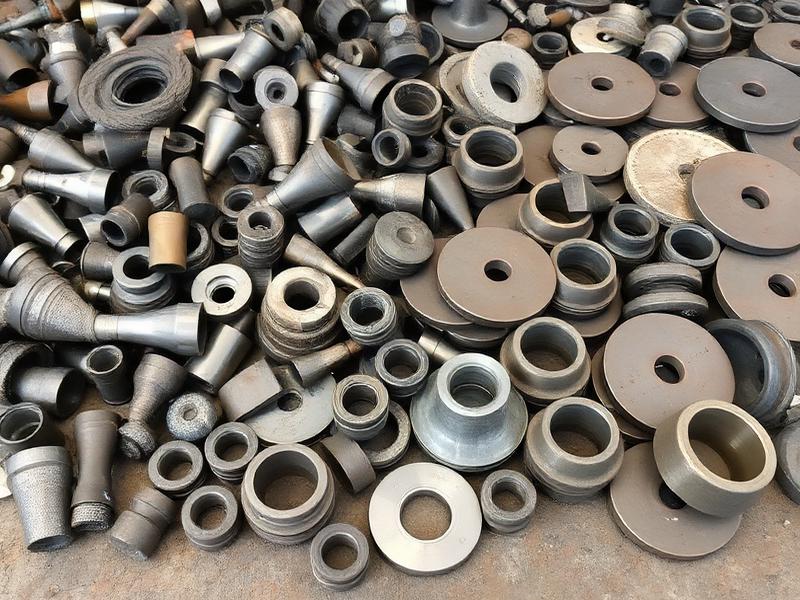
Carbide dies are heavy, thick-section components used in wire drawing, tube drawing, cold heading and extrusion. Once the working bore is worn beyond re-polishing, the die is retired and enters the recycling chain.
Die scrap is frequently supplied with steel casings or shrink rings still attached. Whether the casing is removed before shipment is a commercial decision that affects the net carbide content, and it should be agreed before material is offered.
The way cased and uncased hardmetal is treated across the market is covered in our tungsten carbide scrap guide.
Technical specification
This material is covered by our solid carbide cutting and tooling scrap specification, which sets out typical forms, identification, contamination and deduction factors, sampling and packing. Typical characteristics only — contractual specifications are agreed per lot.
Material identification
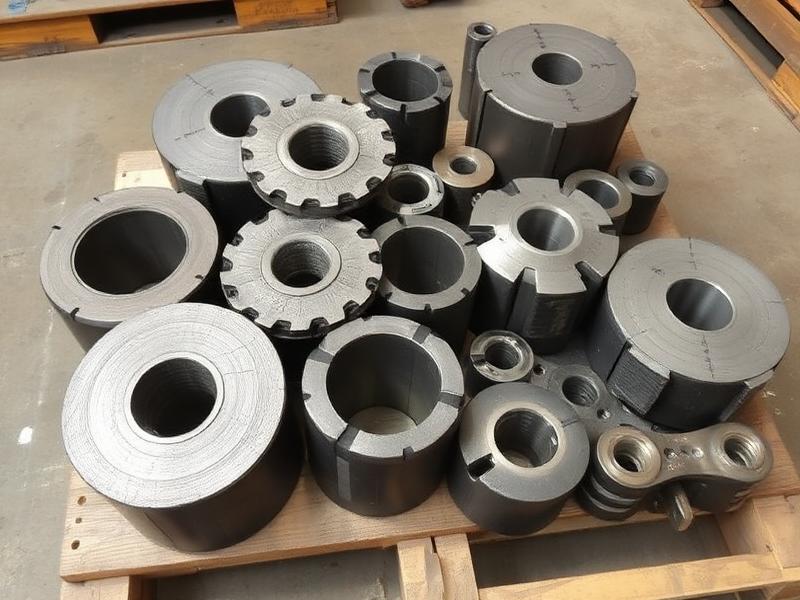
Carbide dies come from wire drawing, cold heading, tube drawing and extrusion operations. The defining commercial feature of this stream is the steel casing: many dies are supplied as a carbide nib pressed or shrunk into a steel ring or holder, and that steel is often a large share of gross weight.
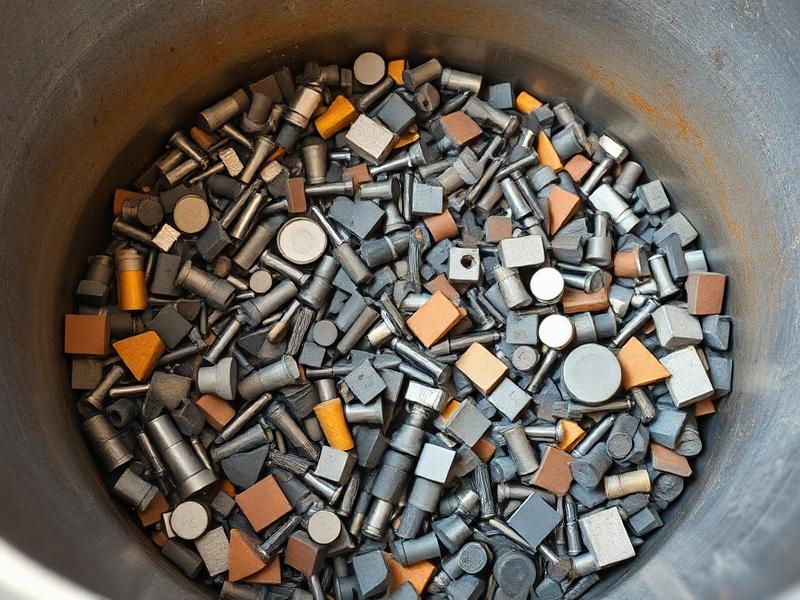
Uncased nibs, worn drawing dies and broken die halves also occur. A parcel of loose nibs and a parcel of complete cased dies of the same gross weight are very different propositions, which is why the cased and uncased fractions are always described separately.
- Wire drawing dies, cased and uncased
- Cold heading and forming dies and punches
- Tube and extrusion dies, including large-section pieces
- Broken die halves and cracked nibs
- Loose recovered nibs where the casing has already been removed
The steel casing question
Steel casing is not contamination in the ordinary sense — it is an integral part of the article — but it is not recoverable tungsten-bearing material either. Removing nibs from casings is possible and is done by some generators, though it takes press work and is not always economic on small pieces.
For evaluation, what matters is a realistic view of the cased-to-uncased ratio and the typical size of the pieces. Where a buyer's process requires nibs only, that requirement should be raised before the lot is confirmed, since it changes both the preparation and the terms.
- Ratio of cased dies to loose nibs across the parcel
- Typical nib size relative to the surrounding steel
- Drawing lubricant, soap and residue retained in die bores
- Cracked or heat-damaged pieces that fragment during handling
- Presence of non-carbide dies — tool steel and ceramic — in the same collection
Inspection and analysis
Surface screening on a cased die reads the casing, not the nib, so handheld measurements on assembled dies say little about the hardmetal inside. Where elemental information is required, it must be taken from exposed carbide, and the sampling and analysis method has to be agreed in writing. Nautica does not operate its own laboratory; testing is carried out by a laboratory or inspection company the parties appoint.
Packaging for heavy pieces
- Steel drums or heavy-duty boxes rated for the piece weight
- Cased dies and loose nibs packed and labelled as separate fractions
- Large individual dies secured so they cannot shift on the pallet
- Packages filled by weight, palletised, strapped and labelled with net weight
Export terms
Die parcels are dense and usually modest in volume, so they consolidate well with other hardmetal streams into a single shipment. Quotations are prepared once the cased and uncased fractions, packing and any sorting scope are agreed; terms can be FOB Rotterdam or CIF to the destination port.
Cased dies, nib recovery and how carbide share is estimated
Drawing dies, extrusion dies and forming tooling frequently arrive with the carbide nib still pressed or shrunk into a steel casing. The casing can outweigh the nib several times over, so the commercial question on a cased-die parcel is never the gross weight — it is what proportion of that weight is actually carbide.
In practice the share is estimated from casing dimensions, nib bore size and a physical check on a representative sample, rather than assumed from a nominal figure. Where a seller can press out even part of the parcel, the resulting loose nibs are directly assessable and the remaining cased items can be discussed separately.
Condition of the nib itself matters less than sellers often expect. Worn bores, cracked nibs and dies that failed in service are entirely normal in this stream; carbide that has cracked has not lost its recoverable content. Drawing lubricant, soap residue and wire fragments in the bore are the practical nuisance, and draining and brushing the parcel before packing is usually worthwhile.
- Approximate number of cased dies against loose nibs
- Typical casing size and nib bore range where known
- Whether a press-out facility is available at the loading location
- Lubricant, soap and wire residue condition of the parcel
Die parcels are collected from wire, fastener and forming plants across Europe and consolidated at Nautica's Netherlands base for shipment through Rotterdam. Cased and uncased fractions are described as received, and independent inspection can be appointed under a contractually agreed scope.
Material forms
- Wire and tube drawing dies with or without steel casings
- Cold heading and cold forming dies
- Extrusion die inserts
- Carbide punches, pellets and nibs
Typical sources
- Wire and cable drawing plants
- Tube and profile manufacturers
- Cold heading and fastener production
- Die service and refurbishment shops
Applications and recovery routes
- Thick-section carbide feedstock for reclamation
- Recovery of tungsten and binder metal units
- Secondary raw material for hardmetal manufacture
Sorting and preparation
- Identification and, where agreed, removal of steel casings and shrink rings
- Magnetic checks on decased material
- Removal of lubricant residue and soap powder
- Separation of carbide dies from fully steel tooling
Inspection and verification
- Visual inspection
- Material sorting
- Magnetic separation where applicable
- XRF analysis where technically suitable
- PMI verification where applicable
- Weight verification
- Moisture inspection where applicable
- Radioactivity screening
- Packing inspection
- Loading supervision
- Third-party inspection by mutual agreement
Inspection scope, testing method, certificates, and acceptance criteria must be agreed in the sales contract before shipment.
Packaging and loading
- Steel drums with reduced fill height because of high piece weight
- Timber crates for oversized die bodies
- Palletised with dunnage to prevent movement in transit
- Individual package weights recorded
Export documentation
- Commercial Invoice
- Packing List
- Bill of Lading
- Certificate of Origin
- Weight Certificate
- Inspection Certificate
- Certificate of Analysis, when available
- Technical Data Sheet, when applicable
- Insurance Certificate, depending on Incoterm
- Loading photos and videos
Available documentation depends on the product, inspection arrangement, destination requirements, and agreed contractual terms.
Tungsten Carbide Dies — frequently asked questions
Related materials