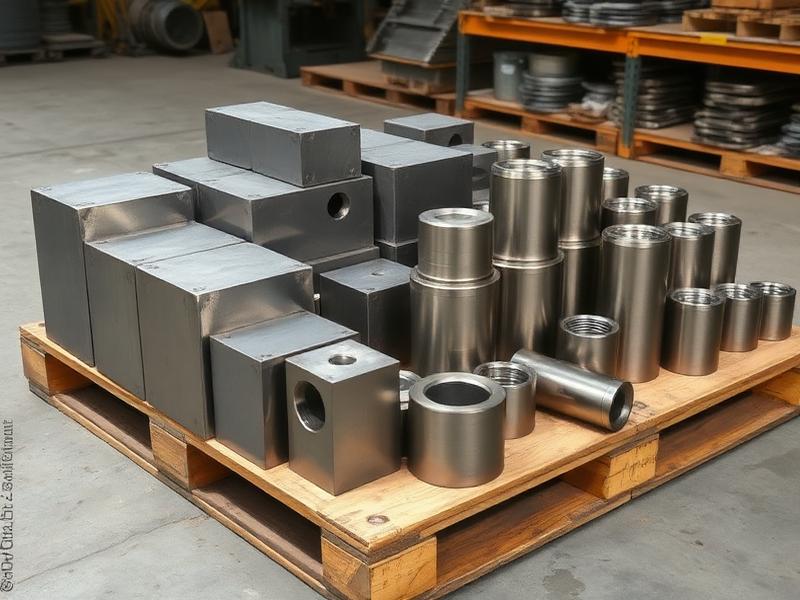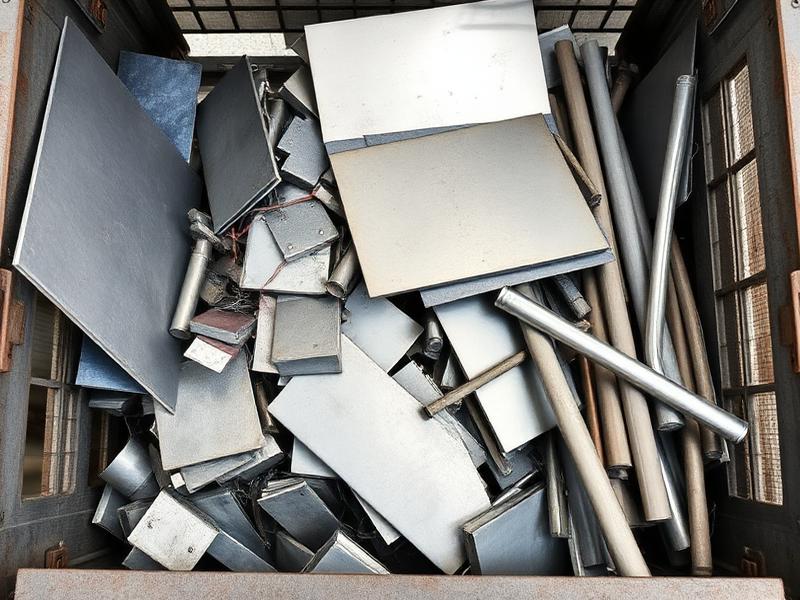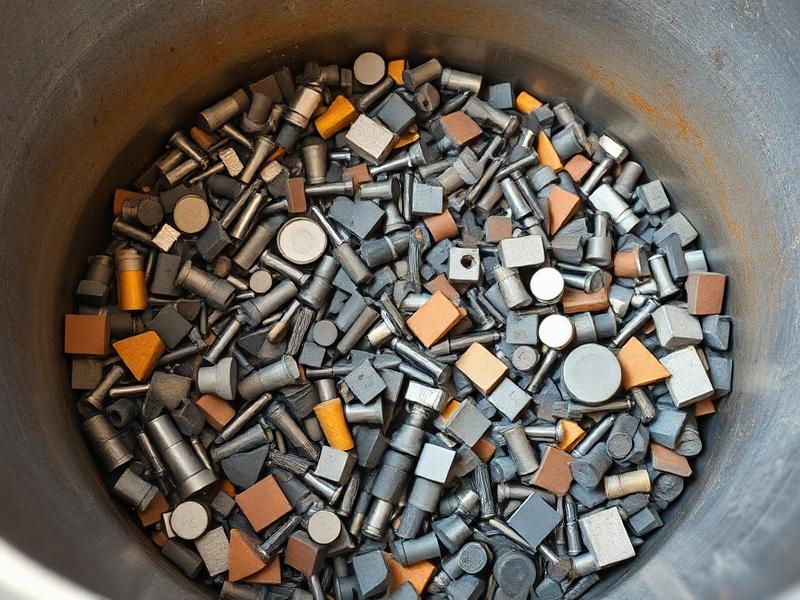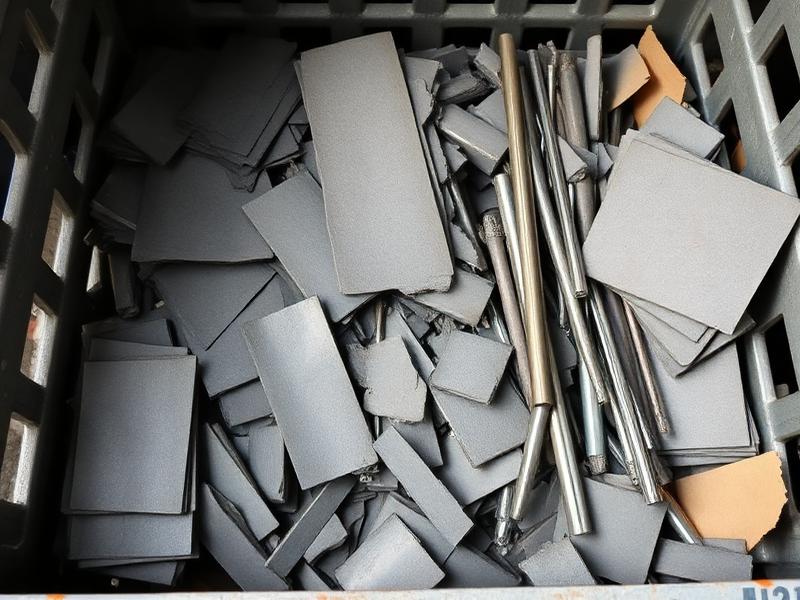
Product overview
Pure tungsten scrap is generated wherever unalloyed tungsten is fabricated or consumed: welding electrode stubs, furnace hot zone components, sheet and foil offcuts, wire remnants and target material from coating operations.
The stream is comparatively clean but must be kept separate from cemented carbide and heavy alloy, since reclamation routes and commercial terms differ substantially between them.
The relationship between tungsten metal, heavy alloy and cemented carbide is set out in our tungsten scrap material guide.
Technical specification
This material is covered by our pure tungsten metal and tungsten heavy alloy specification, which sets out typical forms, identification, contamination and deduction factors, sampling and packing. Typical characteristics only — contractual specifications are agreed per lot.
What counts as pure tungsten scrap
Pure tungsten scrap is unalloyed tungsten metal in wrought or sintered form: welding electrodes, sheet and plate offcuts, rod and bar ends, wire, furnace elements, heat shields, crucibles and sputtering target remnants. It is a metal stream, distinct from both cemented carbide and nickel-bound heavy alloy.
Much of it comes from high-temperature processing and vacuum furnace equipment, which means it frequently arrives oxidised, discoloured or coated with process deposits from its service environment.
- TIG and plasma welding electrodes, including used and broken stubs
- Sheet, plate and foil offcuts from fabrication
- Rod, bar ends and wire from drawing and forming operations
- Furnace elements, heat shields, boats and crucibles
- Sputtering target remnants and vacuum component parts
Oxidation, deposits and service history
Tungsten oxidises heavily at high temperature, so furnace-service material can carry a thick oxide layer or condensed deposits from whatever was processed in the furnace. That surface condition affects both the appearance and the weight of the parcel, and it is described as found rather than cleaned away with a paragraph.
Service history matters for a second reason: material recovered from specialised process equipment can carry residues from the process it served. Generators should state what the equipment was used for so the parcel can be reviewed properly. Commercial acceptance is subject to material review.
- Oxide layers and furnace deposits from high-temperature service
- Process residue on crucibles, boats and vacuum components
- Thoriated and other doped electrode types, which the generator should identify
- Copper, steel and ceramic parts attached to elements and shields
- Whether the parcel is fabrication offcut material or service-returned equipment
Fabrication offcuts versus service returns
New offcut material from a fabricator — clean sheet trim, rod ends, wire — is homogeneous, uncontaminated and easy to describe. Service-returned furnace hardware is not. Both trade, but combining them into one drum removes the ability to describe either accurately, so they are kept and offered as separate fractions.
Packaging and preparation
- Steel drums or boxes filled by weight, given the density of the metal
- Electrodes packed so points and stubs stay contained
- Clean offcut material kept separate from oxidised furnace hardware
- Attached copper, steel and ceramic removed at source where practical
- Palletised, strapped and labelled with fraction, lot reference and net weight
Export and documentation
Tungsten metal parcels are dense and generally modest in volume. Documentation is issued per shipment, and the applicable customs classification depends on the actual material, its form and the destination, so importers should confirm it with their broker before contracting. Quotations are prepared FOB Rotterdam or CIF to the destination port.
Furnace and electrode arisings, oxidation and stream separation
Unalloyed tungsten arrives from a small number of well-defined places: high-temperature furnace hot zones, welding electrode consumption, lighting and electron-device manufacture, sputtering target remnants, and the machining of tungsten mill products. Each source has a characteristic condition, and stating the source usually communicates more than a physical description does.
Oxidation is expected on anything that has seen furnace service. Tungsten oxidises heavily at temperature in air, and hot-zone parts often carry a substantial oxide layer. This does not exclude the material, but where oxide is a real share of piece weight it forms part of the assessment.
Stream separation is the point that most affects value. Pure tungsten, tungsten heavy alloy and cemented carbide are three different materials with three different processing routes, and they are frequently mixed by generators who see them all as 'tungsten'. Keeping them in separate labelled containers at source protects the value of all three.
Thoriated welding electrodes are handled as a distinct question: they contain a low-level radioactive additive, they are subject to their own handling and regulatory expectations, and they are declared and discussed before any parcel containing them is shipped.
- Source process — furnace internals, electrodes, targets, lighting or machining
- Degree of surface oxidation and whether it is superficial or heavy
- Whether copper, ceramic or steel attachments remain on the pieces
- Whether thoriated electrodes are present in any part of the parcel
Tungsten metal parcels are sourced from fabricators, welding suppliers and high-temperature processing plants across Europe. Fractions are described by origin and condition — clean offcut or service-returned — so a buyer can judge the parcel before committing, and loading is handled through Rotterdam.
Material forms
- TIG welding electrode stubs
- Sheet, plate and foil offcuts
- Rod, bar and wire remnants
- Furnace hot zone shields and heating elements
- Sputtering target remnants
Typical sources
- Welding operations and fabrication shops
- Vacuum furnace manufacturers and service providers
- Electronics and thin-film coating industries
- Lighting and electron device manufacturing
Applications and recovery routes
- Remelt and powder production routes
- Chemical reclamation of tungsten units
- Secondary feedstock for tungsten mill products
Sorting and preparation
- Separation from cemented carbide and heavy alloy
- Removal of copper, steel and ceramic attachments
- Segregation of thoriated electrode material where declared
- Radioactivity screening before loading
Inspection and verification
- Visual inspection
- Material sorting
- Magnetic separation where applicable
- XRF analysis where technically suitable
- PMI verification where applicable
- Weight verification
- Moisture inspection where applicable
- Radioactivity screening
- Packing inspection
- Loading supervision
- Third-party inspection by mutual agreement
Inspection scope, testing method, certificates, and acceptance criteria must be agreed in the sales contract before shipment.
Packaging and loading
- Steel drums for stubs and small offcuts
- Bundled and crated sheet material
- Palletised and strapped for container loading
- Weight records maintained per package
Export documentation
- Commercial Invoice
- Packing List
- Bill of Lading
- Certificate of Origin
- Weight Certificate
- Inspection Certificate
- Certificate of Analysis, when available
- Technical Data Sheet, when applicable
- Insurance Certificate, depending on Incoterm
- Loading photos and videos
Available documentation depends on the product, inspection arrangement, destination requirements, and agreed contractual terms.
Pure Tungsten Scrap — frequently asked questions
Related materials