Aluminum UBC Scrap Exporter – Used Beverage Cans from Rotterdam
Nautica Metal Scrap B.V. is a leading Dutch supplier of aluminum UBC scrap (used beverage cans) to smelters and recycling plants across China, Vietnam, Thailand, and the Asia-Pacific region. Our UBC bales meet ISRI Taldon specifications, are SGS-inspected at the Port of Rotterdam, and shipped CFR/CIF to major Asian ports.
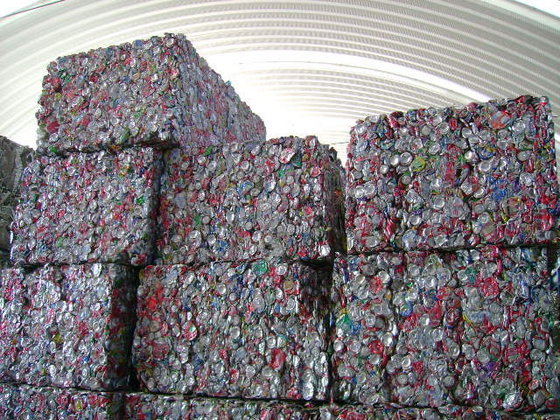
What Is Aluminum UBC Scrap?
Aluminum UBC (Used Beverage Cans) is one of the most widely recycled non-ferrous metals in the world. Post-consumer aluminum drink cans — primarily made from 3104 body stock and 5182 lid alloy — are collected, sorted, cleaned, and compressed into dense bales for export to secondary aluminum smelters.
UBC recycling saves up to 95% of the energy required to produce primary aluminum from bauxite ore, making it one of the most environmentally beneficial recycling processes available. Every ton of recycled UBC eliminates approximately 9 tons of CO₂ emissions compared to primary production.
At Nautica Metal Scrap B.V., we source UBC scrap from established European collection networks, process them through our quality control protocols, and export containerized shipments from the Port of Rotterdam to recycling facilities across Asia.
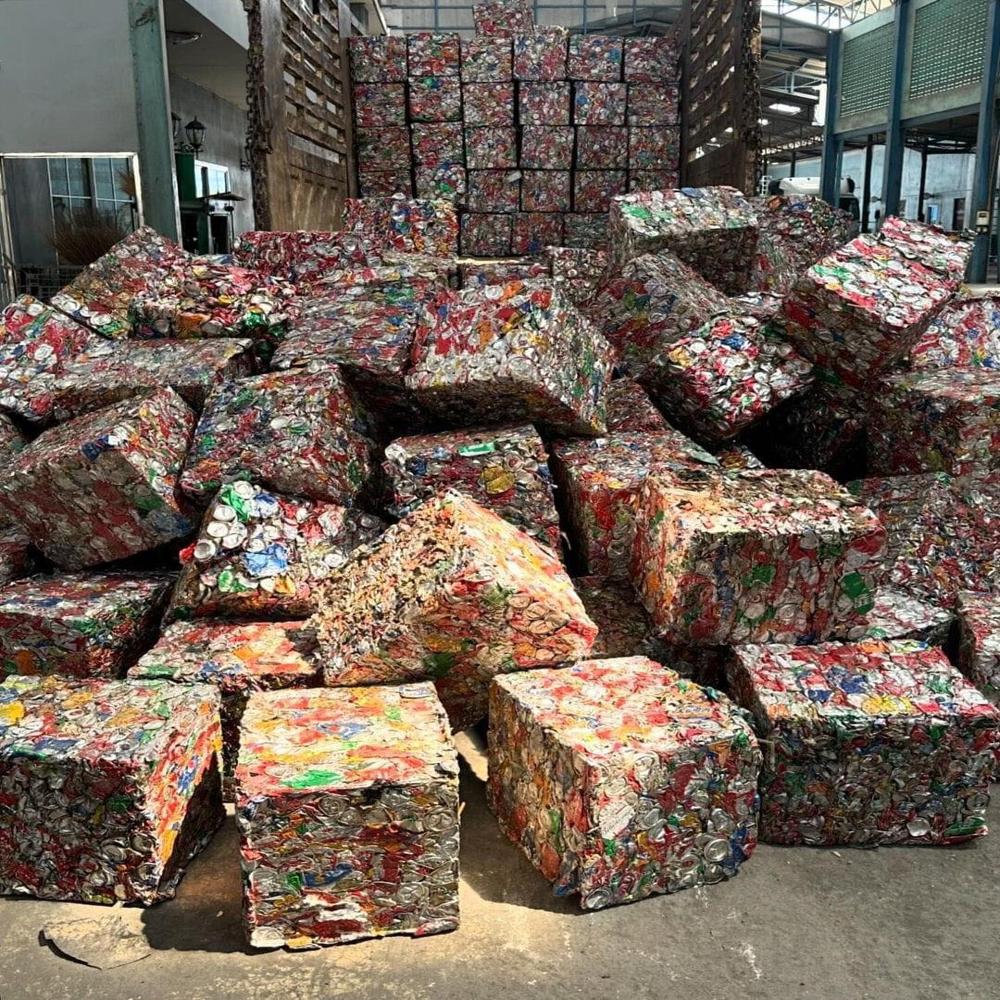
UBC Scrap Technical Specifications
Our aluminum UBC scrap conforms to ISRI Taldon classification and meets the strict import requirements of Chinese and Asian smelters.
Chemical Composition
- Base Alloy (Body)3104 (Al-Mn-Mg)
- Lid Alloy5182 (Al-Mg)
- Aluminum Content92–96%
- Manganese (Mn)0.8–1.4%
- Magnesium (Mg)0.8–1.3%
- Silicon (Si)≤0.6%
Physical & Trade Specs
- ISRI GradeTaldon
- HS Code7602.00
- Moisture≤5%
- Contamination≤2%
- Bale Weight400–500 kg
- Density (Baled)350–500 kg/m³
Packing, Loading & Inspection
Packing Details
- • Hydraulically compressed bales (400–500 kg each)
- • Secured with steel strapping
- • Loaded into 20ft or 40ft HC containers
- • Net weight per 20ft container: ~18–20 MT
- • Net weight per 40ft HC container: ~22–25 MT
- • Fumigated as per destination country regulations
Loading Port: Rotterdam
- • Port of Rotterdam — Europe's largest seaport
- • Direct shipping lines to Shanghai, Ningbo, Guangzhou, Ho Chi Minh City, Bangkok, Laem Chabang
- • Transit time to China: 28–35 days
- • Transit time to SE Asia: 25–32 days
- • CFR & CIF pricing available
- • Full container load (FCL) shipments
SGS Inspection
- • Pre-shipment SGS inspection at Rotterdam
- • Quality certificate issued per container
- • Weight verification (draft survey or weighbridge)
- • Moisture and contamination testing
- • Photographic documentation of loading
- • Independent third-party lab analysis available
Monthly Supply Capacity & Payment Terms
Nautica Metal Scrap B.V. maintains a robust supply chain of UBC scrap sourced from collection programs across Western Europe — including the Netherlands, Germany, Belgium, France, and the UK. Our established relationships with municipal recycling authorities and private collectors ensure consistent monthly volumes.
Monthly UBC Supply
2,000–5,000 MT per month
Minimum Order Quantity
25 MT (1 × 20ft container)
Payment Terms
30% TT (Telegraphic Transfer) advance + 70% LC (Letter of Credit) at sight
Why Asian Smelters Choose Our UBC
- Low contamination (≤2%) ensures high yield at the furnace
- Consistent bale density for predictable melting performance
- SGS-certified quality at loading port Rotterdam
- Competitive CFR/CIF pricing benchmarked to LME
- Reliable monthly supply with long-term contract options
- Full documentation: B/L, commercial invoice, packing list, SGS certificate, certificate of origin
- Dedicated account manager fluent in English and Mandarin
- Track record since 2016 — 200+ satisfied Asian buyers
UBC Scrap Applications & Recycling Process
Aluminum UBC scrap is the backbone of the circular aluminum economy. After collection and baling, UBC goes through a multi-stage recycling process to produce secondary aluminum alloys.
Recycling Process
- De-lacquering: Removal of internal coatings and external print at 500–550°C
- Shredding: Bales broken down into chips for uniform melting
- Magnetic separation: Removal of any ferrous contaminants
- Melting: Charged into rotary or reverberatory furnace at 660–750°C
- Fluxing & degassing: Impurities removed, hydrogen content reduced
- Casting: Molten aluminum cast into ingots, billets, or rolling slabs
End-Use Applications
- New beverage can production — closed-loop can-to-can recycling
- Secondary alloy manufacturing — production of 3xxx and 5xxx series alloys
- Automotive components — engine blocks, wheels, body panels
- Construction materials — extrusion billets for architectural profiles
- Packaging foil — thin gauge foil for food and pharmaceutical packaging
UBC Scrap Pricing & Market Overview
Aluminum UBC scrap prices are closely tied to the London Metal Exchange (LME) aluminum benchmark, typically trading at a discount of 15–25% to the LME cash settlement price. The exact discount depends on bale quality, contamination levels, moisture content, and destination port logistics costs.
For the latest UBC pricing and market trends, read our comprehensive UBC Scrap Price Guide 2026. We offer both CIF and FOB pricing to accommodate different buyer preferences.
Nautica Metal Scrap B.V. provides transparent, LME-indexed quotations updated weekly. Our pricing team monitors global UBC demand patterns — particularly from Chinese smelters in Guangdong, Shandong, and Zhejiang provinces — to ensure our CFR quotes remain competitive. Contact our sales desk for a current UBC price indication.
Related Aluminum Scrap Products
Container Loading Capacity
Loaded weight per container is calculated on a calibrated 60-tonne weighbridge at our Rotterdam yard. Photographs and bridge tickets accompany every shipment for aluminum ubc scrap.
| Container | Net Loaded Weight | Form |
|---|---|---|
| 20'GP | 18–20 MT | Densified bales 250–500 kg |
| 40'HC | 22–24 MT | Densified bales |
ISRI Grade
Talc (baled) / Taldon (loose)
HS Code
7602.00
Typical Purity
98% Al alloy avg
Quality Assurance Process
- 1
Gate inspection
Inbound trucks weighed and visually graded against ISRI master samples before unloading.
- 2
Yard re-sort
Material re-sorted by alloy family, photographed lot-by-lot, and segregated to grade-specific bays.
- 3
Magnet & XRF check
Magnetic separation removes ferrous contamination; XRF spot-checks confirm alloy chemistry.
- 4
Pre-load audit
Container floor lined, weight target confirmed, stuffing sequence photographed with timestamps.
- 5
Third-party inspection
SGS, Bureau Veritas, Intertek, CCIC or TÜV inspect on buyer request before bill-of-lading release.
- 6
Seal & document
High-security bolt seal applied; seal number printed on packing list, B/L and inspection certificate.
SGS & Intertek Inspection
Pre-shipment inspection is arranged at the loading point on the buyer's request. SGS, Bureau Veritas, Intertek, CCIC and TÜV are all welcome at our Rotterdam yard — the buyer instructs the inspector directly and we invoice the cost at actual.
The inspector observes stuffing, draws representative samples for XRF or wet-lab analysis, photographs the loaded container, witnesses the seal application and issues the inspection certificate prior to bill-of-lading release. Destination-mandated certificates (BIS for India, CCIC for China, TSE for Turkey) are arranged where required.
Shipping & Logistics
Loading takes place at our Rotterdam yard with direct gate access to ECT, APMT and RWG terminals. Weekly direct sailings cover Asia, the Middle East, Africa and the Americas. Typical transit times below are indicative — exact ETAs are confirmed on each booking.
Rotterdam → Nhava Sheva
18–22 days
Rotterdam → Shanghai
28–32 days
Rotterdam → Ho Chi Minh
28–32 days
Rotterdam → Mersin
14–18 days
Rotterdam → Jebel Ali
18–22 days
Rotterdam → Houston
18–22 days
Export Documentation
- Commercial invoice & packing list
- Weighbridge tickets per container
- Bill of lading (telex-release on request)
- Container loading photographs
- EUR.1 movement certificate (where applicable)
- EU Annex VII waste-shipment document (non-OECD)
- Third-party inspection certificate (SGS/BV/Intertek/CCIC)
- Certificate of origin (Chamber of Commerce)
Countries We Supply
We ship aluminum ubc scrap on CIF and FOB terms to industrial buyers in over fifty countries. Active monthly contracts include:
Buyer FAQ
Are the UBC bales densified?
Yes. We bale UBC to 350–500 kg/m³ density using hydraulic balers, which maximises container weight and reduces freight per tonne for buyers.
What moisture content can we expect?
Bales are stored under cover and shipped at less than 2% moisture. Loading is postponed during heavy rain to preserve weight integrity.
Do you supply shredded Zorba alongside UBC?
Yes. Zorba shred is offered in a separate stream — request the dedicated quote so we can isolate the cargo and avoid grade contamination.
Is the material magnet-separated?
Yes. UBC undergoes magnetic separation and eddy-current sorting before baling to remove steel cans and ferrous contamination.
What percentage of aluminum recovery can smelters expect?
Delaquered UBC returns 88–92% metallic recovery in a rotary tilting furnace. Non-delaquered material recovers 85–88% due to lacquer burn-off losses.
What is a typical bale size and weight?
Standard mill-size bales measure 60×30×30 cm at 250–350 kg; densified log bales are 80×60×60 cm at 450–500 kg. Both are strapped with steel banding and stackable two-high in a 20'GP.
Is delacquered UBC available?
Yes, thermally delacquered UBC ('coating removed') is offered as a premium grade for buyers running non-decoating furnaces. Standard product is as-baled with the printed can coating intact.
How does UBC pricing move relative to LME?
Baled UBC typically trades at 70–78% of LME primary aluminum, CIF main Asian port, adjusted for freight and the buyer's delacquering capability.
Do you accept mixed alloys inside UBC bales?
No. UBC by ISRI definition is a can-body/can-end mix only (3004 body + 5182 end). Sheet, foil and extrusion contamination is rejected at gate inspection.
What container size gives best UBC economics?
20'GP with 24 MT densified bales is the sweet spot — a 40'HC caps at ~24 MT loaded weight due to road-limit restrictions on the collection side, not cube.
How is loss-on-ignition (LOI) tested?
LOI is measured by pre- and post-furnace weight on a 5 kg sample in a lab muffle at 500°C. Typical result is 4–6% for baled coated UBC — this is disclosed in the offer.
Are UBC bales stackable in the container?
Yes, two-high stacking with dunnage between rows. Loading photographs confirm stacking pattern before the container doors close.
Request a Aluminum UBC Scrap Quotation
Send your quantity, destination port and Incoterm. We reply with a CIF/FOB offer, full specification sheet and export documentation list.
Ready to Discuss Your Metal Scrap Requirements?
Contact our sales team for competitive pricing, bulk orders, and customized solutions.MOQ: 25 MT | Monthly Capacity: 20,000 MT